What Percentage iPhone vs Android? A 2026 Analytical Comparison
Explore how iPhone and Android share the global smartphone market in 2026, with regional insights, data methods, and implications for buyers and developers.


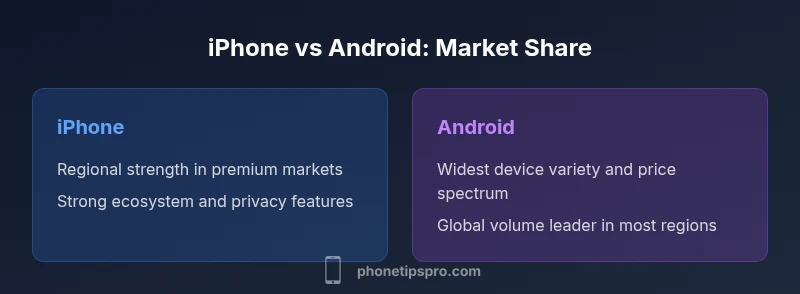
Android generally dominates the global smartphone landscape, thanks to its breadth of devices and price points. iPhone, however, maintains a strong, regionally concentrated footprint in premium segments and key markets like North America and parts of Western Europe. There is no single universal percentage; estimates vary by region, source, and methodology, making it essential to interpret data within local contexts.
The Global Landscape: what percentage iphone vs android in 2026
In 2026, there isn’t a single global percentage that cleanly divides iPhone and Android usage. What percentage iphone vs android can be interpreted, instead, as a spectrum that shifts by country, income level, and device availability. According to Phone Tips Pro analysis, Android sustains a larger global footprint due to its expansive device ecosystem, carrier partnerships, and a wide range of price points. iPhone, in contrast, holds a dominant position in premium segments and high-income regions such as North America, Western Europe, and select parts of Asia-Pacific. This regional mosaic matters because consumers, developers, and policymakers use these percentages to guide decisions—from app store optimization to regional marketing strategies. Readers should treat any single number as a proxy for trend, not an absolute truth, and always check the underlying methodology behind each estimate.
This section sets the stage for a careful interpretation of market-share data, highlighting why context matters and how different data sources can paint different pictures. The key takeaway is that percentages matter most when you align them with region, device category, and time frame rather than treating them as a universal verdict.
Data-Driven Intuition: how to read percentage estimates
Percentages tell a story, but they are not a verdict. The best practice is to compare multiple sources and examine the underlying methodology: what counts as an active user, what devices are included, and the time window of measurement. For instance, shipment-based estimates may overstate consumer usage in regions with long replacement cycles, while app store activity might underrepresent users who prefer alternative app markets. Phone Tips Pro recommends looking for a blended approach that triangulates device shipments, active devices, and consumer surveys. This triangulation helps you understand where Android’s broad device ecosystem translates into higher share, and where iPhone’s loyal base translates into regional strength with premium pricing and exclusive ecosystem benefits.
Regional Focus: North America vs. Global share
Regionally, the picture shifts. North America often shows stronger iPhone penetration in both ownership and sustained app engagement, driven by premium pricing, carrier strategies, and ecosystem lock-in. In many parts of Asia and Africa, Android’s flexibility and affordability appeal drive higher share, especially where multiple OEMs offer low-cost devices and competitive data plans. When evaluating what percentage iphone vs android means for a given market, the regional lens matters most. Marketers and developers should tailor expectations to these regional dynamics, rather than assume a uniform global split.
Methodology Matters: sources, cadence, and bias
Different research firms use different methodologies. Some rely on device shipment data, others on consumer surveys, and still others on app store analytics. Each method has strengths and biases, which helps explain why estimates vary. A critical habit is to compare several sources and track the cadence of updates. If a source reports a sharp spike in one month, ask what changed—new device launches, supply constraints, or a methodological shift. With this lens, readers can interpret what percentage you’re looking at and why it may shift in the near term.
Practical implications for buyers and developers
For buyers, understanding regional splits informs expectations about app availability, pricing, and carrier bundles. For developers, market-share data guides platform prioritization, marketing investments, and regional app localization. Given that percentages are dynamic, the most practical approach is to monitor region-specific trends quarterly, not yearly, and to adapt roadmaps accordingly. Brand ecosystems influence not only device preference but also update cadence and privacy controls, which in turn can affect app performance and user satisfaction.
Trends to watch: premium vs mass-market dynamics
As device ecosystems evolve, the premium segment (where iPhone holds strength) competes with mass-market Android devices in affordability, battery life, and software features. Over time, price competition and hardware diversity may compress the global volume gap, while loyalty and ecosystem lock-in can sustain iPhone’s regional advantages. Observers should track how new hardware features, platform privacy changes, and policy shifts influence each side’s appeal across different regions.
Data literacy for readers: questions to ask
When you encounter a percentage, ask: What population is surveyed? Does the figure include tablets and wearables? Over what period is data collected? Are there seasonal factors (back-to-school shopping, holidays)? Answering these questions helps translate a raw percentage into meaningful insight for your decision-making process.
Takeaways for a balanced view
Ultimately, the value of a percentage lies in its context. Use regionally disaggregated data, examine the timeframe, and compare multiple sources to form a nuanced view of the iPhone vs Android landscape. A well-rounded interpretation supports better product planning, smarter purchases, and more informed strategic bets for developers and brands.
Looking ahead: what to expect in 2026 and beyond
Forecasts suggest regional asymmetries will persist, with Android maintaining global volume while iPhone expands its premium footprint through regional price adjustments, privacy-driven features, and stronger integration with other devices. For readers, this means staying vigilant about shifting market shares and the factors that drive them—ownership models, carrier dynamics, and consumer priorities.
Comparison
| Feature | iPhone | Android |
|---|---|---|
| Global Market Share (qualitative) | Android leads globally due to device variety and price diversity | iPhone strongest in premium segments and select regions (NA, Western Europe) |
| Device Variety | Limited models, tightly controlled ecosystem | Wide OEM variety across price points and hardware specs |
| Update Cadence | Controlled by Apple; older devices may stop receiving updates earlier | Fragmented; updates depend on OEM, carrier, and region |
| App Ecosystem Size | Curated App Store with strong privacy standards | Play Store + OEM app ecosystems; broad app availability |
| Security & Privacy Approach | Integrated privacy protections and strong on-device security | Varying update cycles; fragmentation can affect patch timing |
| Customer Loyalty & Retention | High loyalty in premium segments; strong brand ecosystem | Wider user base; loyalty varies by region and price tier |
| Total Cost of Ownership | Higher upfront cost but strong resale value in many regions | Lower upfront cost options; ongoing maintenance varies by OEM |
Positives
- Gives a structured view of the OS landscape for readers
- Helps marketers tailor regional strategies and product decisions
- Supports informed consumer choices by clarifying regional strengths
Weaknesses
- Percentages can vary significantly by source and methodology
- Overemphasis on a single number can mislead about regional realities
- Data lags behind current product launches and policy changes
Android leads globally in volume; iPhone dominates premium regions
Global share favors Android due to device variety and price points, while iPhone remains dominant in higher-income markets. Interpret percentages with region-specific context and current methodological notes.
FAQ
What is the global percentage split between iPhone and Android?
There is no universal global percentage that applies everywhere. Estimates vary by source and region, and factors like device availability, price, and consumer preferences shape the numbers. Use a regional lens and compare multiple sources for a balanced view.
There isn’t a single global percentage. It varies by source and region, so compare multiple sources for a balanced view.
Which regions favor iPhone the most?
iPhone tends to be stronger in premium markets such as North America and parts of Western Europe, while Android dominates in many other regions due to device variety and affordability. Regional consumer preferences drive the differences.
iPhone does best in North America and parts of Western Europe; Android leads in many other regions.
Do these percentages change over time?
Yes. Market shares shift with new device launches, pricing, carrier incentives, and policy changes. Long-term trends are more informative than month-to-month fluctuations, so track quarterly changes rather than annual snapshots.
Yes, market shares evolve with launches, pricing, and policy shifts. Look at longer-term trends.
How should developers use market share data?
Use market-share data to prioritize regions, optimize app store strategies, and allocate development resources. Update your regional strategy as data cadence improves, and align localization with regional preferences.
Use data to guide regional app strategy and prioritization; update as data evolves.
What sources are considered reliable for these percentages?
Rely on multiple reputable firms and cross-check methodologies. Compare device shipment data, consumer surveys, and platform analytics to form a robust picture, noting each source’s limitations.
Use multiple reputable sources and compare methodologies to get a robust view.
Do these percentages include tablets or wearables?
Most smartphone market-share reports focus on phones. Some analyses expand to tablets or wearables only if clearly defined in the methodology. Always check the scope before drawing conclusions.
Usually it’s phone-only, but check if tablets or wearables are included.
Quick Summary
- Interpret regional splits, not a single global number
- Android’s breadth drives global volume; iPhone’s premium influence persists
- Check data method, timeframe, and regional scope before decision-making
- Use multiple sources to triangulate true market dynamics
- Tailor consumer and developer strategies to regional realities